


Skip to content

RTO reduction audit for COD-heavy Indian stores

From a COD return you can't explain to a pincode-level map of where the margin leaks.

Every COD order that comes back costs you forward shipping, return shipping, repacking, and the ad that bought it in the first place.

See the 6-milestone process

₹50,000 + GST2–3 weeks

RTO is a leaky bucket: patch the pincodes leaking the most before you pour in more ad spend. Our RTO reduction audit finds which ones, with pincode-level clustering of every COD return to origin, a COD-policy review and a costed implementation plan. ₹50,000 + GST, one time, in 2–3 weeks.

Rated 4.9 on Google200+ ecommerce brandsFixed price · one-time audit

The transformation

From an RTO number you're guessing at to a pincode-level map of exactly where it leaks.

Before

You know your overall RTO% is high, but not which pincodes, which courier, or which order values are actually driving it — so every fix so far has been a guess.

After

A written, prioritized, costed plan ranking exactly which pincodes and lanes to patch first — built for your team to run, or ours.

Across the 200+ Indian D2C brands we’ve built and run, every engagement, this audit included, runs on a fixed price and a written scope.

Source: Growww Tech brand data

What’s included

The guesswork disappears. Every pincode gets a number.

Six things the ₹50,000 + GST audit delivers — on the courier and order data you already have.

  • Data pull + analysis

    3–6 months of order and courier data pulled, matched, and reconciled — the baseline every other finding in the report is built on.

  • Pincode-level RTO clustering

    Which lanes and pincodes are driving the return rate, ranked by recoverable margin — not one blended RTO number for the whole store.

  • COD-policy analysis

    Where to disable or gate COD outright, and where a prepaid incentive pays for itself faster than a blanket ban would.

  • Courier-allocation review

    Which courier runs which lane today, and whether a different allocation would cut RTO without adding cost.

  • Address-quality + pre-dispatch verification

    Where bad addresses and skipped verification are creating avoidable returns before the courier even attempts delivery.

  • NDR workflow review

    How non-delivery reports get worked today — call attempts, reschedule windows, escalation — and where the process itself is losing orders.

Timeline

Fit check to report — 2–3 weeks.

Data-only work on systems you already run — no integration, no dev time. That's why it's fast.

  1. Before kickoff

    Fit check

    30-minute call — confirms the audit will pay for itself

  2. Week 1

    Data pull

    Courier reports, order exports, pincode data — read access only

  3. Week 2

    Analysis

    Pincode clustering, COD policy, courier allocation, NDR review

Total

Fit-check to written report + handover call

2–3 weeks

The proposal

Everything is on this page: the scope, the process, what is not included and the terms. Read it, then pay and get started, or ask for the same thing as a formal quote.

RTO Reduction Audit

One-time · 2–3 weeks

Your COD returns, mapped pincode by pincode — not guessed at.One invoice, one time — the report and plan are yours to keep either way

₹50,000+ GST

Report + plan in 2–3 weeks

One invoice, paid upfront through Zoho Billing. Your GST invoice from Grovesbox Private Limited is emailed the moment the payment clears. Work begins within one business day of a cleared payment.

Refunds work exactly as our terms say. Read the refund terms

UPI · Cards · Netbanking · EMI · Secure checkout via Zoho Billing

  • Pincode-level RTO clustering — which lanes and pincodes leak, ranked
  • COD-policy analysis — where to gate it, where prepaid pays for itself
  • Courier allocation and the NDR workflow, both reviewed lane by lane
  • Written, prioritized, costed implementation plan — yours or ours to run
See the 6 milestones, step by step

Fixed scope, in writing.

The scope is fixed in writing before kickoff. Fixing what the audit finds is quoted separately, never billed silently. Read the terms
What clients say

“Managing Lokshi's Choice through Instagram and WhatsApp DMs was becoming impossible, as we were constantly missing messages and struggling to keep up with order updates.”

I was hesitant about the technical challenges of a website, but Raghoo and the Growww Ecommerce team simplified everything and delivered exactly the result I wanted. Since launching, the automated tracking and product management have transformed our workflow and significantly boosted our sales. Their professional approach is perfect for any entrepreneur looking to take the next step in their business growth.

LokshiFounder, Lokshi’s ChoiceRated 5 out of 5

The COD leak

Numbers we can show you

~26%COD orders that came back (RTO)
<2%Prepaid orders that came back, same shipments

Source: Shipway’s FY25 D2C shipments, reported by Mediabrief on 29-07-2025; Meesho’s offer document, 27-11-2025. Published benchmarks, not a claim about your store. Meesho’s FY25 numbers point the same way: about 78% of COD orders delivered, against about 97% of prepaid.

Every pincode gets a number.

Who you’ll talk to

The people who answer your call.

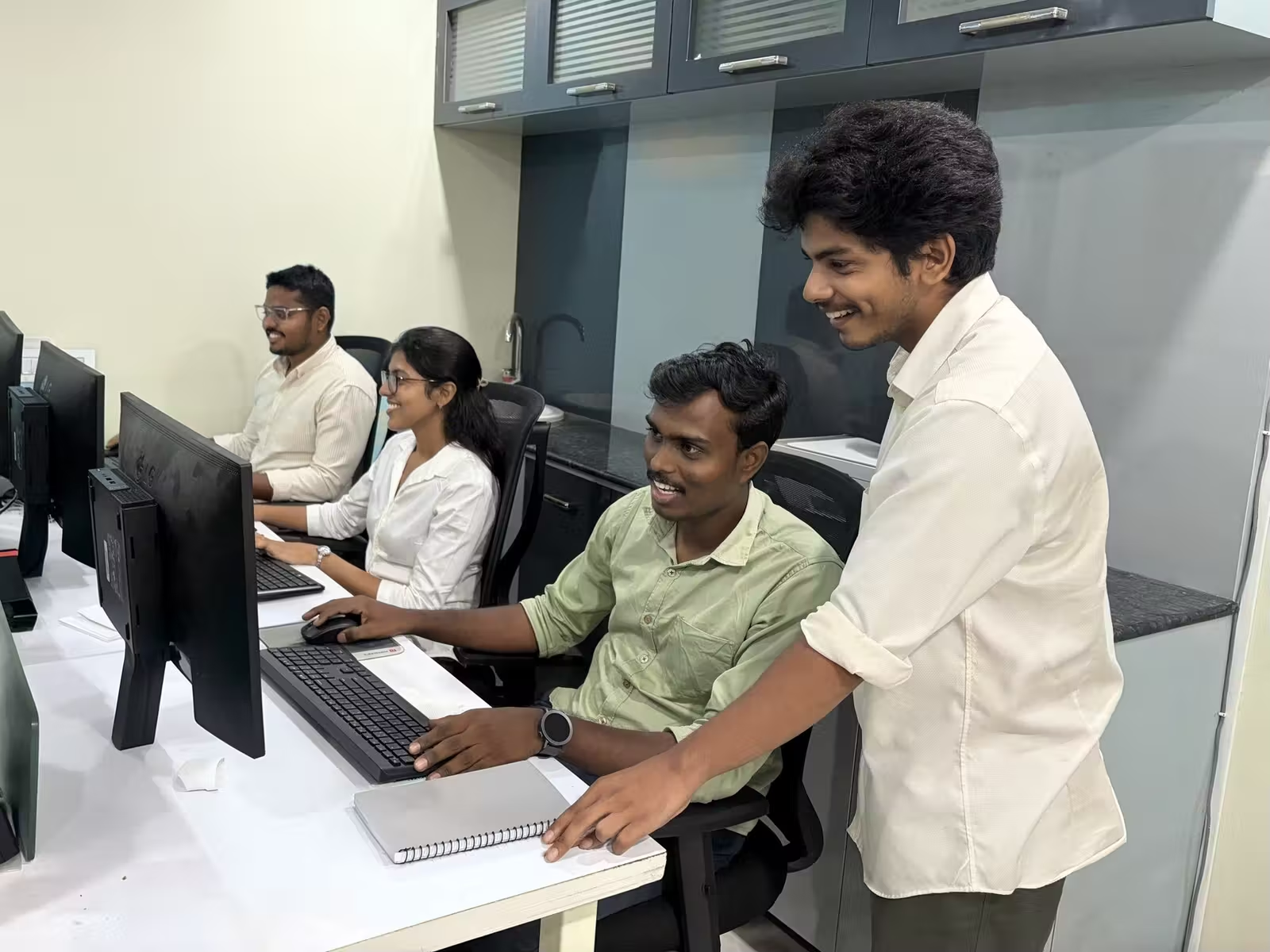
Your call goes to our own team at the Visakhapatnam office, the same people who pull your courier data and write the report.

Dhushyant Deepak Chand Puredla helping Tarun Sai Kotni at his desk at our Visakhapatnam office
  • Call languages

    Telugu, English, Hindi, Kannada

  • Hours

    Mon–Fri, 9:00 am–7:00 pm IST

  • Office

    1st Floor, YBR Nilayam, Dayal Nagar Colony, Vishalakshi Nagar, Visakhapatnam, Andhra Pradesh 530043, India. Open in Google Maps (opens in a new tab)

  • Other cities

    Meet in person: by appointment in Bengaluru, Hyderabad, Chennai, Mumbai, Delhi NCR, Surat

  • Call time

    You pick morning, afternoon or evening, Monday to Friday.

Straight answer

Who the audit is for, and when to wait.

This is for you if

  • COD is a big share of your orders, and you can’t say which pincodes send them back.
  • You ship about 300 orders a month or more.
  • You can export 3–6 months of courier and order data.

Not for you if

  • You’re close to fully prepaid. RTO isn’t your leak, so the CRO pass is the better spend.
  • Below about 300 orders a month. The margin you can win back won’t clear the fee yet, and we say so on the call instead of taking the money.
  • You want to start on your own. Our RTO playbook shows the first fixes, free.

Process

How the audit runs — milestone by milestone.

Six milestones from fit check to handover call. Each one says what we ship and what you receive.

  1. Milestone 01

    Fit Check — Honestly

    A 30-minute call where we look at your RTO% and order volume — if the audit won't pay for itself, we say so before any invoice moves.

    • We ask for your rough RTO% and monthly order volume — below roughly 300 orders/month, we'll usually say the recoverable margin doesn't clear the ₹50,000 fee yet.
    • We confirm which courier(s) and store platform you run, so the data pull in the next milestone is fast.
    • If the fit is right, you get a data-pull checklist and a named point of contact for the whole engagement.

    You’ll receive

    • Straight fit verdict on the call
    • Data-pull checklist
    • Named contact confirmed
  2. Milestone 02 · Week 1

    Data Pull

    Courier reports, order exports, and pincode-level data pulled from your systems — read access only, no dev work on your side.

    • Courier panel exports — Delhivery, Shiprocket, Xpressbees, or whichever you run — for the last 3–6 months.
    • Order data export from your store platform, matched against the courier data by order ID.
    • No API keys handed over and no integration work required — read access to existing exports is enough.

    You’ll receive

    • Courier + order data collected
    • Data matched and cleaned
    • Gaps flagged for follow-up
  3. Milestone 03 · Week 2

    Analysis

    The pulled data gets clustered by pincode and lane, cross-checked against COD policy, courier allocation, and the NDR workflow.

    • Pincode-level RTO clustering — which lanes and pincodes are driving the return rate, ranked by recoverable margin.
    • COD-policy analysis — where disabling or gating COD would pay for itself, and where a prepaid incentive is the cheaper fix.
    • Courier allocation and the NDR (non-delivery report) workflow reviewed against the clustering — the same courier on every lane is a common, fixable cause.

    You’ll receive

    • Pincode/lane ranking
    • COD-policy recommendations
    • Courier + NDR findings
  4. Milestone 04 · Week 2–3

    Report + Plan

    Every finding written down in one report, with a prioritized, costed plan for fixing what's found — ranked by recoverable margin, not by what's easiest to say.

    • Each recommendation is costed — what it takes to implement and roughly what it recovers — so priority order is a business decision, not a guess.
    • The plan is written so it can be run by your team or ours — no internal shorthand that only makes sense to us.
    • Nothing in the report gets held back for a future engagement — this is the complete finding, not a teaser.

    You’ll receive

    • Written RTO audit report
    • Prioritized, costed implementation plan
    • Pincode + courier data tables
  5. Milestone 05

    Handover Call

    A walk-through of the report and plan with your team — questions answered live, not left for an email thread.

    • We go through the pincode ranking, the COD-policy recommendations, and the costed plan section by section.
    • If your team is implementing directly, we flag the parts that need a decision from you first.
    • If you want us to implement, that gets scoped and quoted separately, starting from this same report.

    You’ll receive

    • Live walk-through call
    • Questions answered on the spot
    • Implementation options confirmed
  6. Milestone 06

    Out-of-Scope Policy

    What the ₹50,000 buys, and what it doesn't — stated once, in writing, so nothing gets billed silently later.

    • Implementing the fixes — tooling, courier-rule changes, address-verification setup — is quoted separately after the report, never folded in.
    • Ongoing logistics management stays a separate service (Shipping & Returns, /services/logistics-rto) — this audit is a point-in-time diagnosis, not a running operation.
    • Negotiating courier contracts on your behalf isn't part of this engagement.

    You’ll receive

    • Written scope boundary
    • Implementation quoted separately
    • No silent scope creep

Scope boundaries

What we need from you. What we don't do.

No surprises after kickoff. Here is what each side brings, in writing.

What we need from you

  • Courier panel exports (Delhivery, Shiprocket, Xpressbees, or whichever you run) for the last 3–6 months
  • Order data export from your store platform — read access only, no API keys
  • A named point of contact for the fit-check call and the handover call
  • Your current COD policy, if one exists in writing
  • A reply within a few working days when we flag something that needs your decision

What’s not included

  • Implementing the fixes — quoted separately once the report is done, whether your team runs it or ours does
  • Ongoing logistics management — that's the Shipping & Returns service (/services/logistics-rto), not this one-time audit
  • Negotiating courier contracts on your behalf
  • Tooling costs — prepaid-incentive apps, address verification, courier-rule engines — named and priced in the plan, billed separately

FAQ

Asked before every RTO audit.

Courier panel exports — Delhivery, Shiprocket, Xpressbees, or whichever you run — plus an order data export, for the last 3–6 months. Read access only. No API keys handed over, no integration work, no dev time on your side.

A written, prioritized report: pincode-level RTO clustering ranked by recoverable margin, COD-policy recommendations, a courier-allocation review, an address-quality assessment, an NDR workflow review, and a costed implementation plan ranked by what recovers the most margin first.

Either. The plan is written so your team can run it directly, or we can — quoted separately once the report is done. Some clients implement themselves; the report is built to allow exactly that.

It's Unicommerce's finding, not ours — per Unicommerce's April 2026 D2C report, festive-season COD orders ran a 58% return-to-origin rate versus under 15% for prepaid. That's a nationwide festive-season benchmark, not a claim about your specific store. The fit-check call establishes your actual RTO% before any invoice moves — some stores run well under that, some worse.

COD is a large share of Tier-2/3 revenue for most Indian D2C brands — a blanket ban costs you real orders, not just RTO. The fix is surgical: gate COD on the specific pincodes and order values where it's losing money, and leave it running everywhere else.

If you're already close to fully prepaid, don't — RTO isn't your leak, and the ₹50,000 is better spent on the CRO pass. And below roughly 300 orders a month, the recoverable margin usually doesn't clear the audit fee yet; we'll say so on the fit-check call rather than take the money.

This is a one-time audit and plan — data, analysis, report, done in 2–3 weeks. Shipping & Returns (/services/logistics-rto) is the ongoing service that runs deliveries and returns day to day, after the fixes are live. Most clients run the audit first, then decide whether to hand ongoing logistics to us.

No. Implementation — prepaid-incentive tooling, address verification, courier-rule changes — is quoted separately after the report, whether your team runs it or ours does. It's named in the plan, never billed silently.

One-time invoice via Zoho Billing — UPI, cards, netbanking, EMI. A GST invoice lands in your inbox the moment payment clears. No recurring commitment; this is a single fixed-fee engagement.
Start the audit

₹50,000. 2–3 weeks. Every pincode, mapped.

Start with a 30-minute call. We look at your RTO and order volume first, and if the audit won’t pay for itself, we tell you on the call.

Calls Monday to Friday, in Telugu, English, Hindi or Kannada.

₹50,000 + GST · one-time · report in 2–3 weeks