I’ll say this straight: sarees are the single largest fashion category in Indian ecommerce — a ₹60,000+ crore market. And yet most saree sellers I meet are still running everything through WhatsApp forwards, Instagram DMs, and Facebook groups. No website, no payment gateway, no shipping integration.
I see this as a real opening: customers are actively searching Google for sarees, and the competition from organised D2C brands is still thin. Here’s the playbook I hand every saree seller who wants to move from WhatsApp forwards to a proper ₹10L/month D2C operation.
Step 1: Setting Up Your Online Store
In my experience, you need a real website — not just social media. Shopify is the fastest path I recommend for saree brands because it handles payments, inventory, and shipping out of the box.
- Shopify Basic (₹2,500/month) is what I’d start every saree brand on
- I always tell clients to choose a clean theme with large product images — sarees sell on visuals
- I make sure every product page has a size guide and draping style information
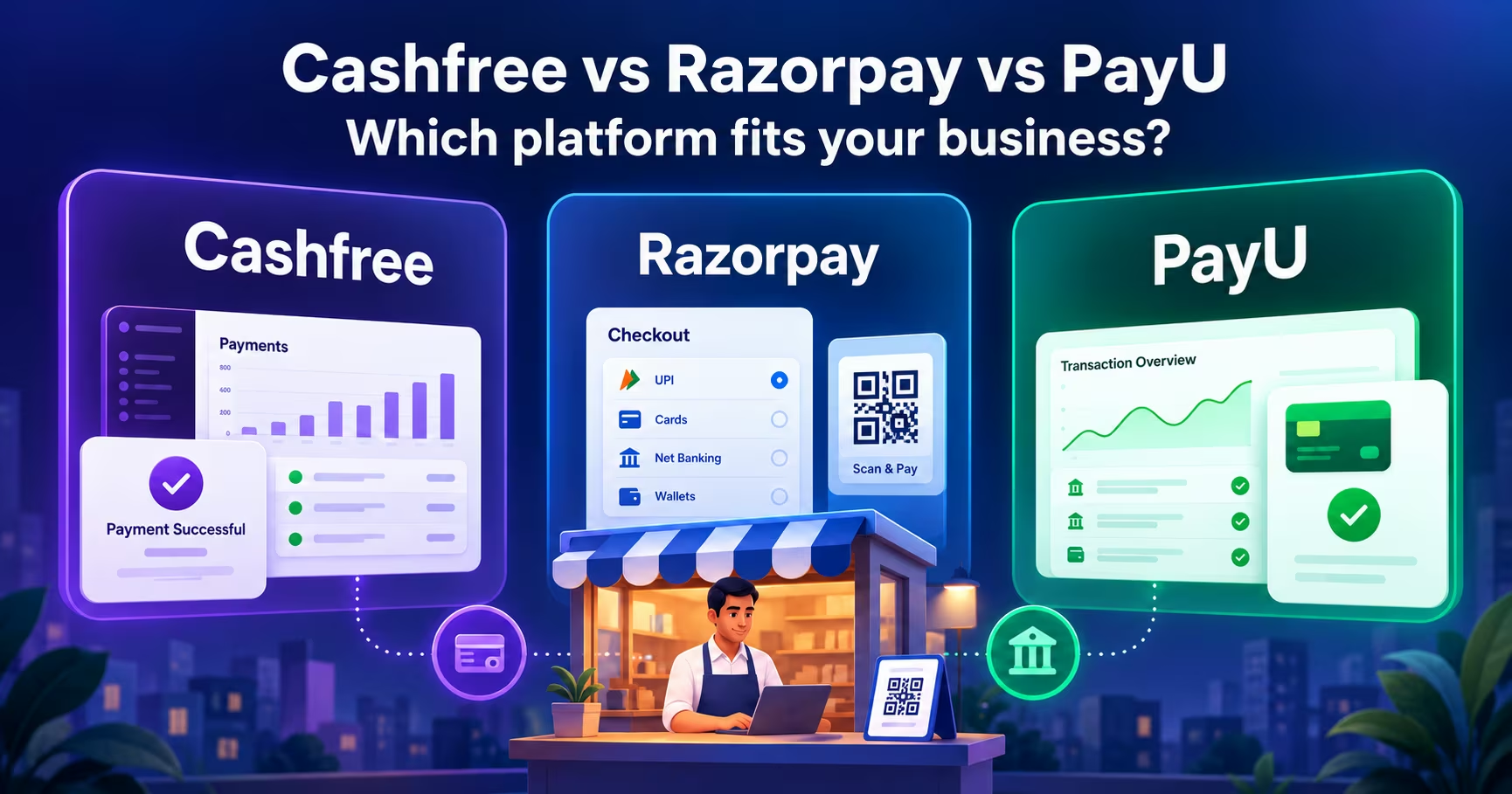
- I enable Razorpay/Cashfree for UPI + cards + COD on every store I set up
Step 2: The Photography That Sells Sarees
In my experience, saree photography is uniquely challenging — the drape, fall, and colour accuracy matter more here than in any other fashion category.
- Mannequin + flat lay — I ask every brand to show the saree on a mannequin (drape style) AND as a flat lay (fabric detail)
- Natural light is non-negotiable — Saree colours look completely different under artificial light. I tell every client to shoot near a window between 10 AM-2 PM.
- Show the pallu and border closeup — This is where the craftsmanship shows, and I’ve watched customers zoom straight into these details.
- On-model shots — Even one photo of the saree being worn dramatically increases conversion, in my experience. Ask a friend to model.
- Video of the drape — I recommend a 15-second video showing the saree’s fall and movement. Post it as an Instagram Reel AND on the product page.
Step 3: Getting Your Pricing and Margin Right
Saree pricing varies enormously — I’ve seen everything from ₹500 cotton sarees to ₹50,000 Banarasi silks. Your margin structure depends on your segment:
| Segment | Price Range | Target Margin | Best Sales Channel |
|---|
| Budget cotton/synthetic | ₹300-800 | 40-50% | Meesho, own website + Meta ads |
| Mid-range handloom | ₹800-3,000 | 50-60% | Own website, Instagram |
| Premium silk/designer | ₹3,000-15,000 | 60-70% | Own website, WhatsApp, exhibitions |
| Luxury/bridal | ₹15,000+ | 65-80% | WhatsApp, appointment-based, exhibitions |
Step 4: SEO for Your Saree Brand
I’ve checked the numbers, and saree-related searches have massive volume on Google India:
- “Buy silk saree online” — 18,000+ monthly searches
- “Cotton saree online” — 12,000+ monthly searches
- “Banarasi saree” — 40,000+ monthly searches
- “Saree for wedding” — 22,000+ monthly searches
Most of this traffic goes to Amazon, Flipkart, and a few established brands. In my experience, a D2C saree brand with good SEO can capture significant organic traffic within 6-12 months.
Key SEO actions: Here’s what I tell every saree brand: write unique descriptions for every saree, create buying guide blog posts (“How to Choose the Right Saree for Your Body Type”), and add region-specific content (“Kanchipuram Silk Sarees: Origin, Quality Marks, and How to Identify Fakes”).
Step 5: Handling the Saree-Specific Challenges
Returns and Exchanges
In the stores I’ve worked on, saree return rates run 15-25%, mainly due to colour mismatch (screen vs reality) and fabric feel. I minimise this with accurate colour-calibrated photography, fabric composition details, a clear return policy (exchange-first, not refund-first), and a WhatsApp video call for premium sarees (show the saree live before shipping).
COD Management
Saree customers, especially in Tier 2/3 cities, heavily prefer COD, in my experience. I use WhatsApp verification and partial COD (₹99-199 upfront deposit) to reduce RTO.
At Growww Tech, my team and I help Indian fashion brands build D2C stores with beautiful product pages, SEO optimisation, and integrated shipping. Let’s build your saree brand online.
Related reading: