“After Amazon’s referral fee, closing fee, FBA charges, and advertising — I make ₹50 on a ₹500 product. Is this even worth it?”
This is the most common frustration I hear from Indian ecommerce sellers. And the instinct is always the same: “I’ll build my own website and keep all the margin!”
I wish it were that simple. Your own website carries different costs — and they’re not always cheaper. Let me walk you through the honest math.
What Amazon and Flipkart Actually Take
Let me break down the real fees for a ₹999 product sold on Amazon India:
| Fee Component | Amount (₹) | % of Sale |
|---|
| Referral fee (category-dependent) | ₹100-170 | 10-17% |
| Closing fee (based on price slab) | ₹25-65 | 2.5-6.5% |
| FBA fee (if using Fulfillment by Amazon) | ₹60-120 | 6-12% |
| Weight handling | ₹30-50 | 3-5% |
| GST on fees (18%) | ₹40-70 | 4-7% |
| TCS (0.5% on net) | ₹5 | 0.5% |
| Total marketplace fees | ₹260-480 | 26-48% |
And that’s before advertising. Amazon Sponsored Products ads typically add another 8-15% of revenue (ACoS) for competitive categories. So the true cost of selling on Amazon can be 35-55% of your selling price.
Flipkart’s fee structure is similar — sometimes slightly lower on referral fees, but with comparable total take-rates. Meesho takes less (0% commission on many categories) but delivers lower AOV and a different customer profile.
What Your Own D2C Website Actually Costs
Now let me run the same ₹999 product through your own Shopify store:
| Cost Component | Amount (₹) | % of Sale |
|---|
| Shopify subscription (₹2,500/month ÷ 300 orders) | ₹8 | 0.8% |
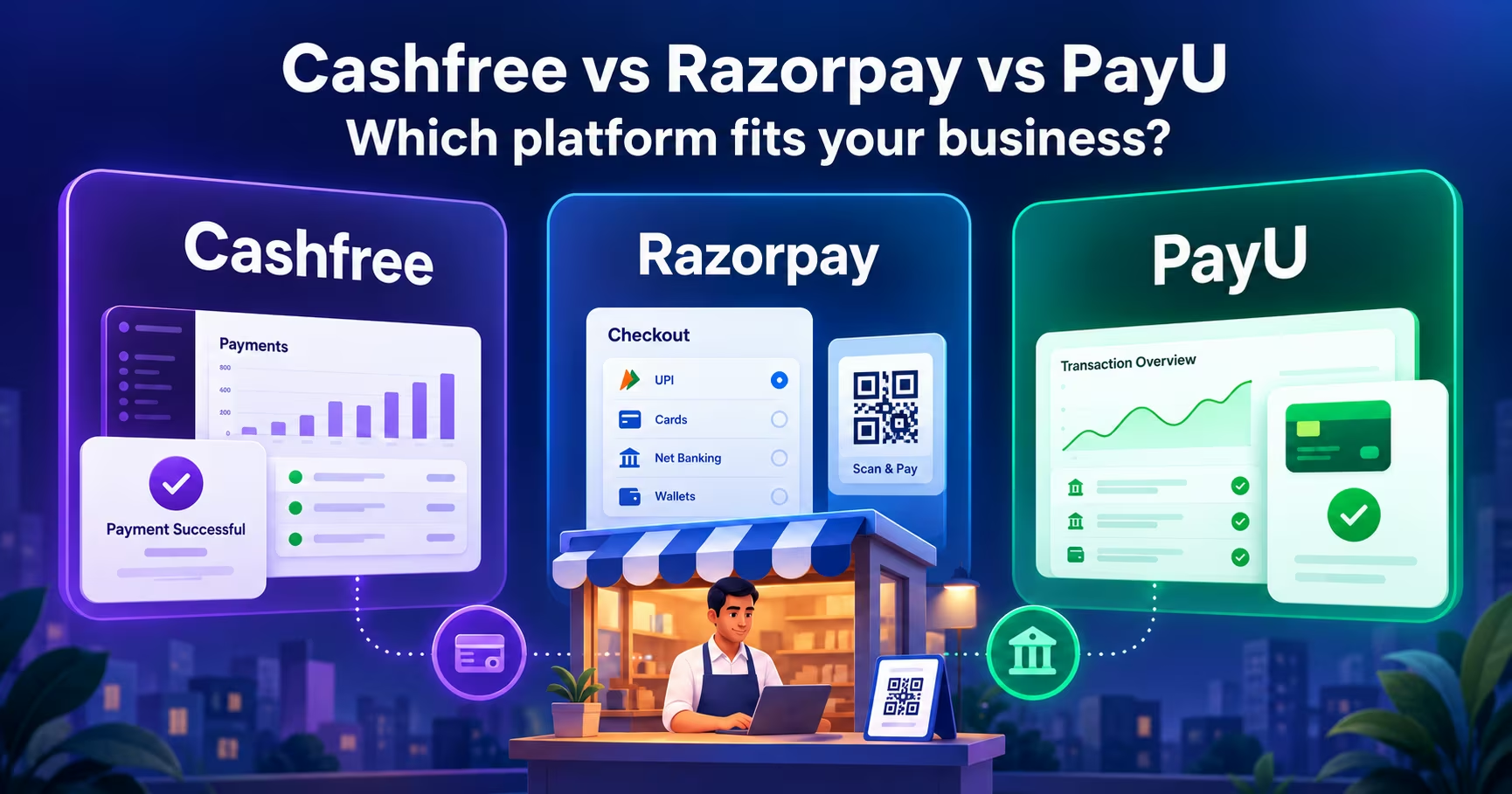
| Payment gateway (Razorpay/Cashfree ~2%) | ₹20 | 2% |
| Shipping (Shiprocket, 500g metro) | ₹50-75 | 5-7.5% |
| Meta/Google ads (CAC ₹250-400) | ₹250-400 | 25-40% |
| Shopify apps | ₹20-40 | 2-4% |
| RTO cost allocation (25% COD RTO) | ₹45-85 | 4.5-8.5% |
| Total D2C website costs | ₹393-628 | 39-63% |
Wait — the D2C website costs MORE?
Often, yes — especially for new brands. The difference that matters is where the money goes:
- Marketplace fees go to Amazon/Flipkart. You get their traffic, but no customer data, no brand building, no relationship.
- D2C costs go toward building YOUR brand’s traffic, YOUR customer list, YOUR brand recognition. The ₹350 CAC on the first order becomes ₹0 on the second order from the same customer.
The Real Answer: It Depends on Your Stage
Stage 1: Just Starting (0-100 orders/month) → Marketplace First
If you’re brand new with zero brand recognition, marketplaces give you something your website can’t: built-in traffic from day one. Amazon India has 300+ million monthly visitors. Your Shopify store starts at zero until you drive traffic there.
My advice: start on Amazon/Flipkart to validate product-market fit, gather reviews, and generate initial revenue. Use this phase to understand your customer, refine your product, and build a reviews base you can showcase later.
Stage 2: Growing (100-1,000 orders/month) → Both, But Shift Toward D2C
Once you’re getting consistent sales, launch your own website. Use marketplace profits to fund your initial D2C customer acquisition. The goal I set with founders: get D2C to 30-40% of total revenue.
The tactics I recommend at this stage:
- Put inserts in marketplace orders directing customers to your website (“Get 15% off your next order at oursite.com”)
- Build your email and WhatsApp list from every touchpoint
- Start content marketing and SEO (this compounds over 6-12 months)
- Run Meta ads to your website, not to marketplace listings
Stage 3: Scaling (1,000+ orders/month) → D2C Primary, Marketplaces as Channel
At scale, I want your D2C website at 50-60% of revenue. Marketplaces become a distribution channel — not your lifeline. The math shifts dramatically once you have:
- Organic traffic (50% of top D2C brand traffic is organic) — free customer acquisition
- Repeat customers (zero CAC on 2nd, 3rd, 4th purchase) — compounds margin
- WhatsApp/email list — a direct line to your customers at near-zero cost
- Brand recognition — customers search for you by name, not by category
The Unit Economics Comparison: Year 1 vs Year 2
| Metric | Amazon (Year 1) | Amazon (Year 2) | D2C Website (Year 1) | D2C Website (Year 2) |
|---|
| Effective cost per order | 35-45% | 35-45% | 40-60% | 20-30% |
| Customer data owned | No | No | Yes | Yes |
| Repeat purchase cost | Same fees again | Same fees again | Near zero (WhatsApp/email) | Near zero |
| Brand equity built | Minimal | Minimal | Growing | Strong |
| Pricing control | Limited (price matching) | Limited | Full | Full |
If you take one thing from this post, take this: Amazon’s costs are linear (same percentage on every order, forever). D2C costs are front-loaded (high CAC initially, then declining as organic traffic and repeat purchases kick in).
5 Rules for the Marketplace-to-D2C Transition
- Never abandon marketplaces completely — Even profitable D2C brands keep 20-30% marketplace revenue as a discovery channel.
- Differentiate your D2C offering — Exclusive products, bundles, or better pricing on your website gives customers a reason to buy direct.
- Invest in SEO early — Content and SEO take 6-12 months to compound. The brand that starts SEO today will have free traffic in 2027.
- Build your owned audience — Every marketplace sale without capturing the customer’s email/WhatsApp is a missed opportunity.
- Track unit economics separately — Don’t mix marketplace and D2C P&L. Know each channel’s true contribution margin.
Need Help Building Your D2C Website?
At Growww Tech, my team and I help Indian brands move from marketplace-only to a healthy D2C + marketplace mix. From Shopify store setup to ad strategy to SEO — we build the foundation that makes your own website more profitable than Amazon. Let’s talk about your brand.
Related reading: